We don't burn waste.
We deconstruct it.
Patent-pending plasma gasification turns the planet's most problematic waste streams — municipal, plastics, tires, hazardous, biomedical, oil sludge — into 99.9% pure green hydrogen. Validated by BARC, IIT Roorkee, and CSIR-CMERI. 80+ R&D installations. Zero dioxins. Zero furans.
The world has two problems.
Problem A · Energy Gap
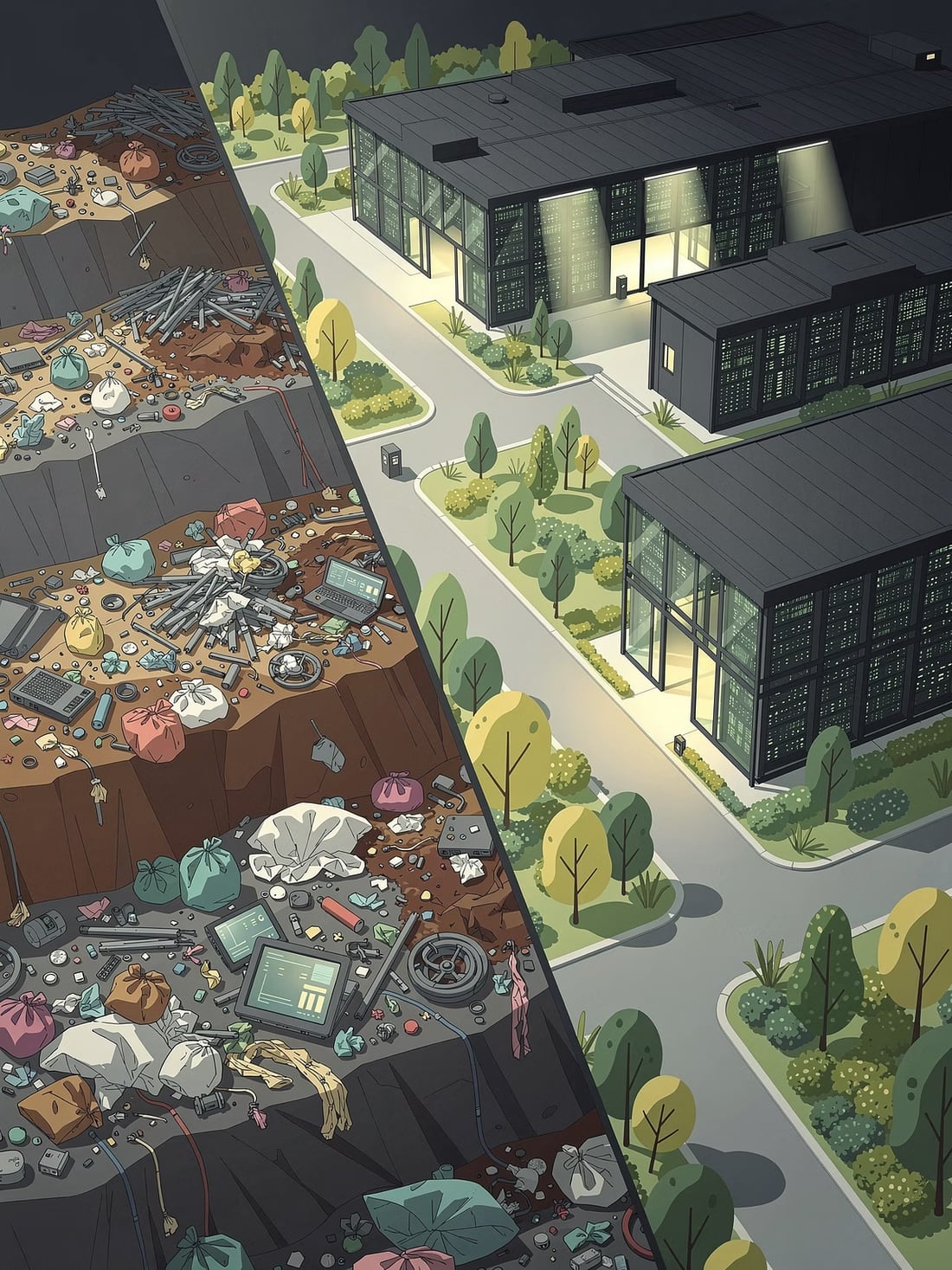
Everyone is building data centres for AI.
No one is generating enough green electricity to power them.
Frontier AI workloads, hyperscale cloud expansion, and grid electrification of transport are all pulling in the same direction: enormous, sustained demand for clean, dispatchable power. Existing wind and solar pipelines won't close the gap fast enough.
- Hyperscale demand growing 2–3x faster than green build-out
- Grid interconnection queues 4–7 years in major markets
- Hydrogen as carrier — storage, transport, peaking — under-built
Problem B · Waste Crisis
2+ billion metric tons of MSW
generated annually.
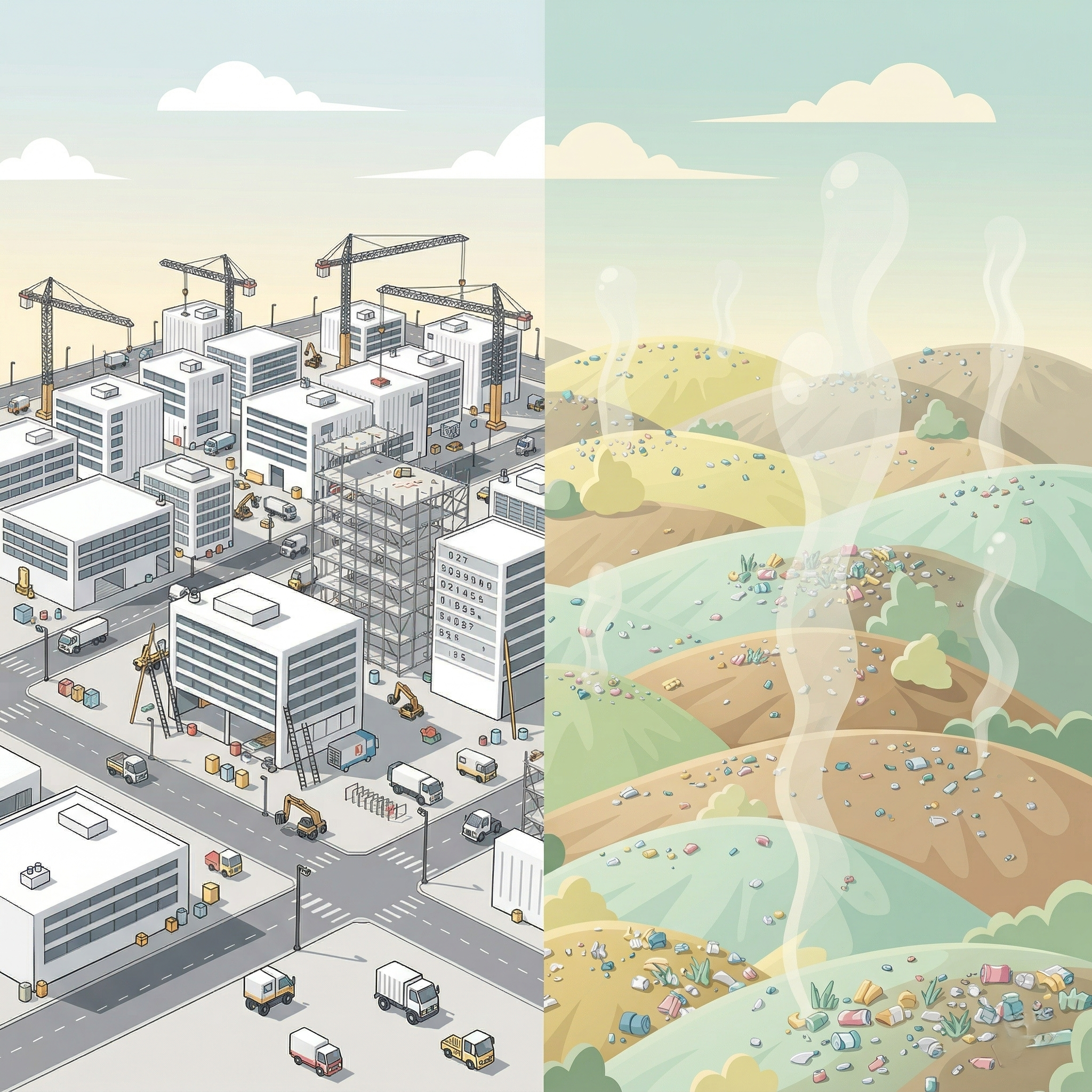
Toxic leachates, methane plumes from open dumps, dioxin-and-furan emissions from incineration. The cost of producing waste is rising every year; the cost of disposing of it, faster. Regulators are tightening — bulk generators in India, the GCC, and the EU are running out of compliant options.
- Methane from landfills — 20% of human-caused emissions, near-term warming worse than CO₂
- Incineration creates dioxins / furans — Stockholm Convention POPs
- Mixed-stream MSW resists recycling; <30% diversion globally
Two problems. One technology that solves both.
We have a patent-pending solution.

Thermal-Catalytic Ionization Process
Plasma gasification optimised for high-moisture mixed MSW. Moisture is a thermodynamic asset, not a liability — we don't pre-dry.
Core Process · Patent Pending
Syngas Purification System
Proprietary downstream processing — multi-stage scrubbing, PSA with CMS adsorbent — drives output to 99.9% H₂ purity, fuel-cell ready.
Output · 99.9% H₂ Purity
Modular Plant Architecture
Containerised, factory-built modules. Site readiness to first-fire in months, not years. Scales from 5 TPD pilot to 100 TPD anchor with the same chassis.
Deployment · 5–100 TPD Modular
Market proven. Don't take our word for it.
Deployed Across
Heavy Industry
National Defense Research
Municipal Waste Management
Petrochemical
Oil Sludge
Deployed With Industry & Research Partners





We don't burn waste. We deconstruct it.
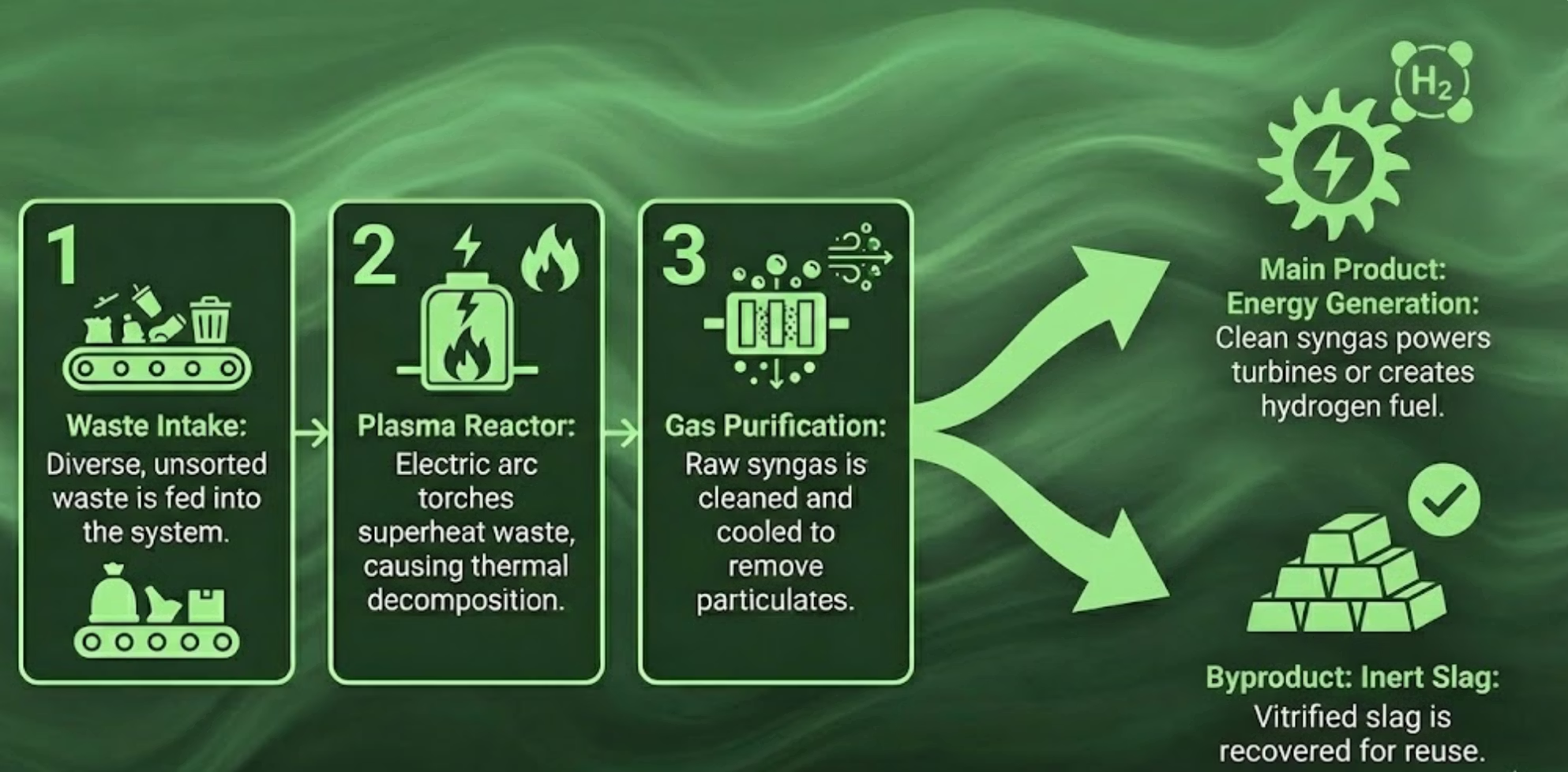
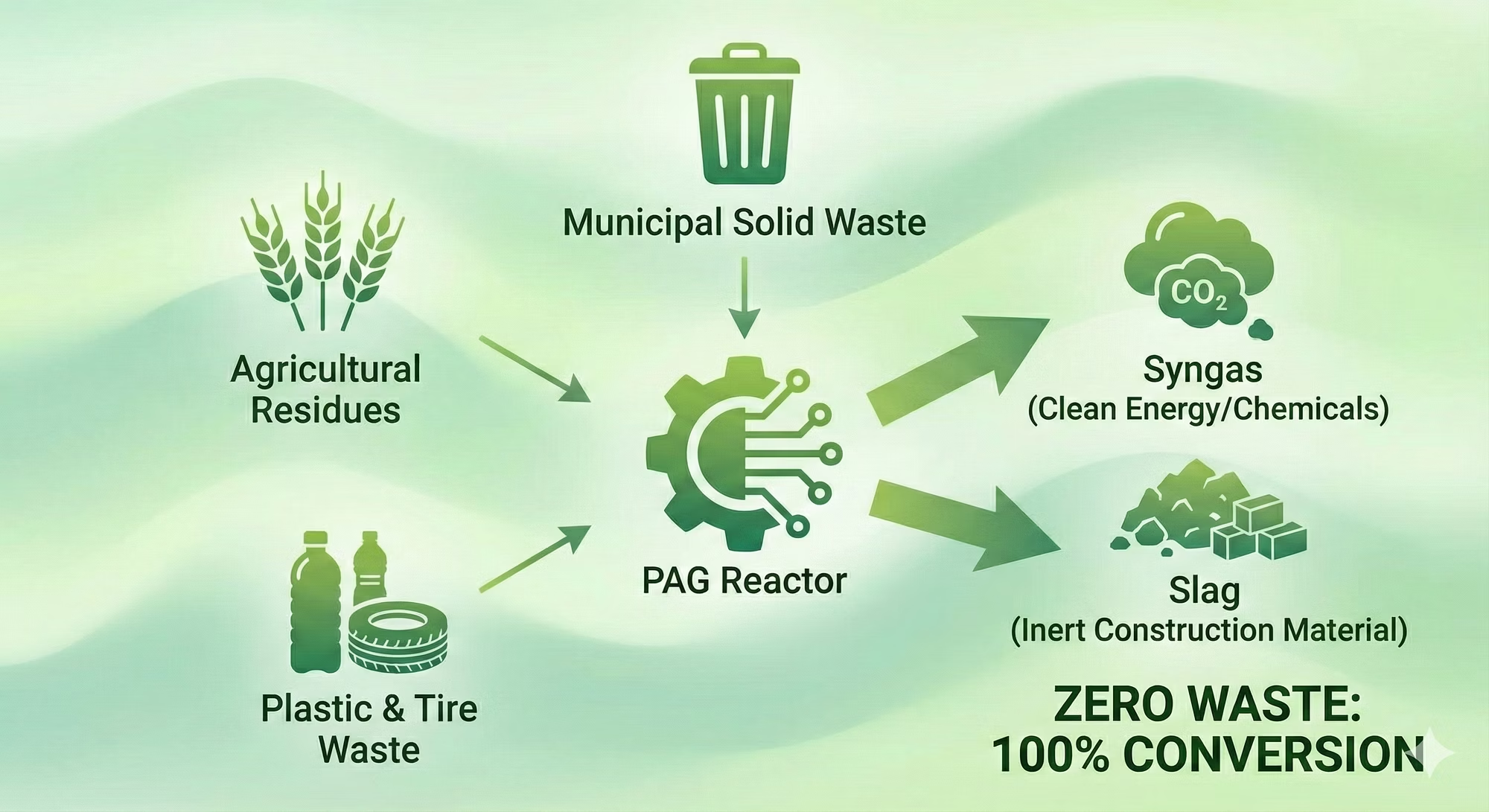
Six steps. Mixed unsorted waste in. Fuel-cell-ready hydrogen out. Inert vitrified slag — usable in construction — as the only solid byproduct.
- 01Input
Waste Input
10 TPD mixed waste, no segregation required. Magnetic metal removal is the only pre-processing.
- 023,000–10,000°C
Plasma Arc Generation
Ultra-high-temperature plasma arc — complete molecular bond breaking. No open flame means no combustion byproducts.
- 03Output
Thermal Decomposition
Output: syngas (H₂ 48%, CO₂ 32%, CO 16%, other 4%) plus inert vitrified slag — usable in construction.
- 04140°C → 35°C
Syngas Cleanup
Multi-stage scrubbing drops temperature from 140°C to 35°C. Moisture content brought to under 1 ppm before purification.
- 0512 bar(g) · 8–10 min cycle
PSA Purification
5-vessel Pressure Swing Adsorption with CMS adsorbent. Drives H₂ to 99.9% purity, fuel-cell ready.
- 06250 bar(g) · 500 m³/hr
H₂ Dispensing
Multi-stage compression to 250 bar(g) for industrial offtake or onsite refuelling. 500 m³/hr peak dispense.
Syngas Composition (Post-Decomposition)
Proven efficacy across diverse waste streams.
| Waste Type | Power In (kW/hr) | Power Out (kW/hr) | Net Power (kW/hr) | Syngas (m³/hr) | Slag (kg/hr) | MW / ton |
|---|---|---|---|---|---|---|
| MSW · 20% moisture | 35 | 66 | 31 | ~65 | ~130 | ~0.7 |
| Plastics | 30 | 120 | 90 | ~118 | ~60 | ~2.1 |
| Hazardous Waste* | 105 | 52 | −53* | ~51 | ~100 | ~1.0 |
| Tires | 20 | 98 | 78 | ~97 | ~120 | ~1.8 |
| Oil Sludge | 32 | 125 | 93 | ~126 | ~63 | ~2.2 |
| Biomedical | 20 | 80 | 64 | ~87 | ~80 | ~1.6 |
* Hazardous Waste net power is negative because of the high energy input required for full molecular decomposition. This is expected and acceptable — the value of the process for hazardous streams is in safe destruction and material recovery, not power generation.
A clear technological advantage.
| Criteria | Ardana PAGS ✓ | Incineration ✗ |
|---|---|---|
| Core Principle | Ultra-high-temp decomposition (starved combustion) | Direct burning of waste |
| Emissions | Significantly lower toxins — no open flame | Higher risk of dioxins and furans |
| Residue | Inert, minimal-volume vitrified slag — reusable | Higher volume of potentially toxic ash |
| Energy Recovery | High-value, flexible syngas → H₂ | Mostly low-value heat / steam |
| Waste Flexibility | Minimal pre-sorting — magnetic metal removal only | Extensive pre-sorting required |
| Moisture Handling | Thermodynamic asset — not a liability | Requires pre-drying — high OPEX |
| Parameter | PAGS (Ardana) | Incineration | EPA Standard |
|---|---|---|---|
| NOx (ppmvd) | 35–40 | 150 | 250 |
| PM (mg/dscm) | <5 | 20–24 | 34 |
| SO₂ (ppmvd) | <2 | 30 | 55 |
| Mercury (µg/dscm) | <2 | 50–80 | 55 |
| Dioxins / Furans | 0 ng/dscm | 13–30 | 25 |
PAGS results derived from BARC / IIT Roorkee / CSIR-CMERI trial data across 80+ R&D installations and 5+ years of operating history. EPA Standard values per US 40 CFR §60 Subpart Eb.
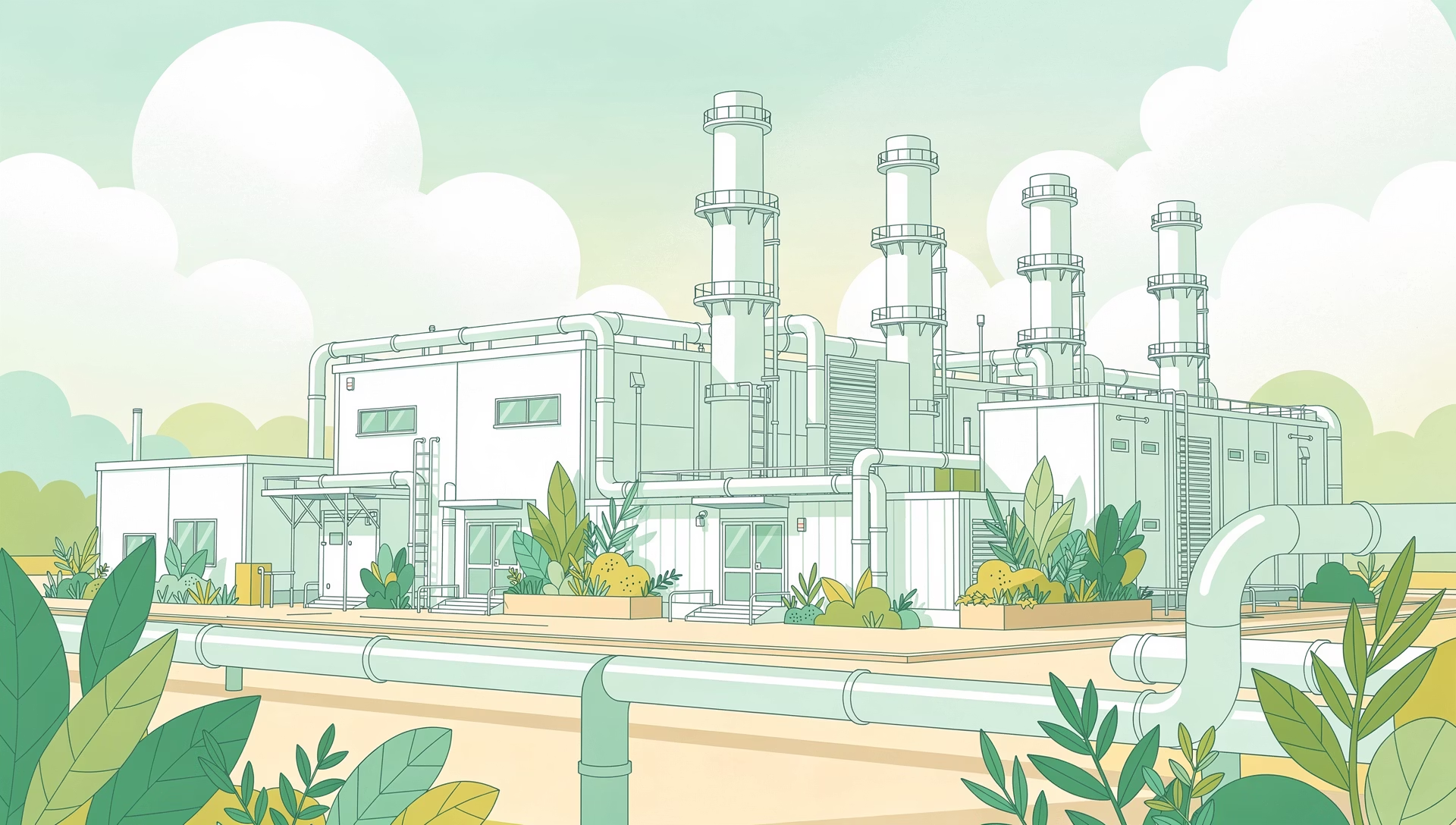
10 TPD waste-to-hydrogen facility. One unit of the global scale-out.
| Metric | Value |
|---|---|
| Plant Capacity | 10 TPD MSW |
| H₂ Production | 989 T / year |
| H₂ Selling Price | ₹2,80,000 / T (~$3,340 USD/T) |
| Annual H₂ Revenue | ₹2,769.20 Lakhs · ~$3.30M USD |
| Carbon Credit Price | $50 USD / T CO₂e · ₹157.50 Lakhs/yr |
| Total Revenue · Year 1 | ₹2,941.70 Lakhs · ~$3.50M USD |
| Total Annual OPEX | ₹383.66 Lakhs · ~$457K USD |
| EBITDA · Year 1 | ₹2,558.04 Lakhs · ~$3.05M USD |
| EBITDA Margin · Year 2+ | 87.0% |
| Total Equipment CAPEX | ₹2,420 Lakhs · ~$2.88M USD |
| Net Project Cost (post-loan) | ₹1,573 Lakhs |
| Monthly EMI | ₹37.143 Lakhs |
| DSCR · Year 1 | 5.74x |
| Average DSCR Y1–5 | 5.74x |
| Loan Closes | 60th EMI |
| Simple Payback | <1 Year (EBITDA basis) |
| 15-Yr Cumulative Revenue | ₹44,167.50 Lakhs |
| 15-Yr Cumulative PAT | ₹30,562.71 Lakhs · ~$36.4M USD |
No government subsidy assumed in this model. Carbon credit revenue at $50/T CO₂e listed price (Verra / Gold Standard pending). Conservative estimate — actual realised pricing in EU CBAM-linked offtake contracts trending higher.
The path to a multi-billion-dollar green hydrogen enterprise.
India
Plant deployments
MSW · captive municipal partnerships
SWM Rules 2026 mandates create immediate offtake demand.
GCC
Plant deployments
Oil sludge · refinery-adjacent siting
UAE / KSA / Oman net-zero targets + sovereign carbon mandates.
10-Year Cumulative Revenue
Across 55 plants at full deployment
10-Year Cumulative Net Profit
After debt service + tax · run-rate basis
Projected Enterprise Value
10x–15x stabilised EBITDA · green infra multiples
Target Annual ROI · ~25.3% · Expanding Post-Debt Amortisation
Regulation is not a tax. It is the moat.
The same rules that make legacy waste-handling more expensive make Ardana's compliant alternative the only viable path forward. Two jurisdictions are leading the way.
India
SWM Rules 2026 create a captive market on April 1, 2026.
- Apr 1 '26Strict bans on landfilling unsegregated MSW; bulk waste generators face mandatory diversion targets.
- EBWGRExtended-Bulk-Waste-Generator Regulations require certified treatment partnerships — Ardana plants qualify as primary destination.
- CaptiveMunicipalities + state pollution boards become structural offtake partners. No customer acquisition cost.
GCC
Sovereign net-zero pledges turn diversion into a fiscal priority.
- UAE75% waste-diversion target by 2030. Federal-level circular-economy investment alongside sovereign wealth allocations.
- KSA3 GW of waste-to-energy capacity targeted under Vision 2030. PIF + NEOM as cornerstone investors.
- Net Zero 2050Region-wide pledges combined with carbon-credit pricing tailwinds → green hydrogen offtake economics that work without subsidy.